

G
La Garzette
Le journal le plus lu les pieds dans l'eau. Abonnez-vous !

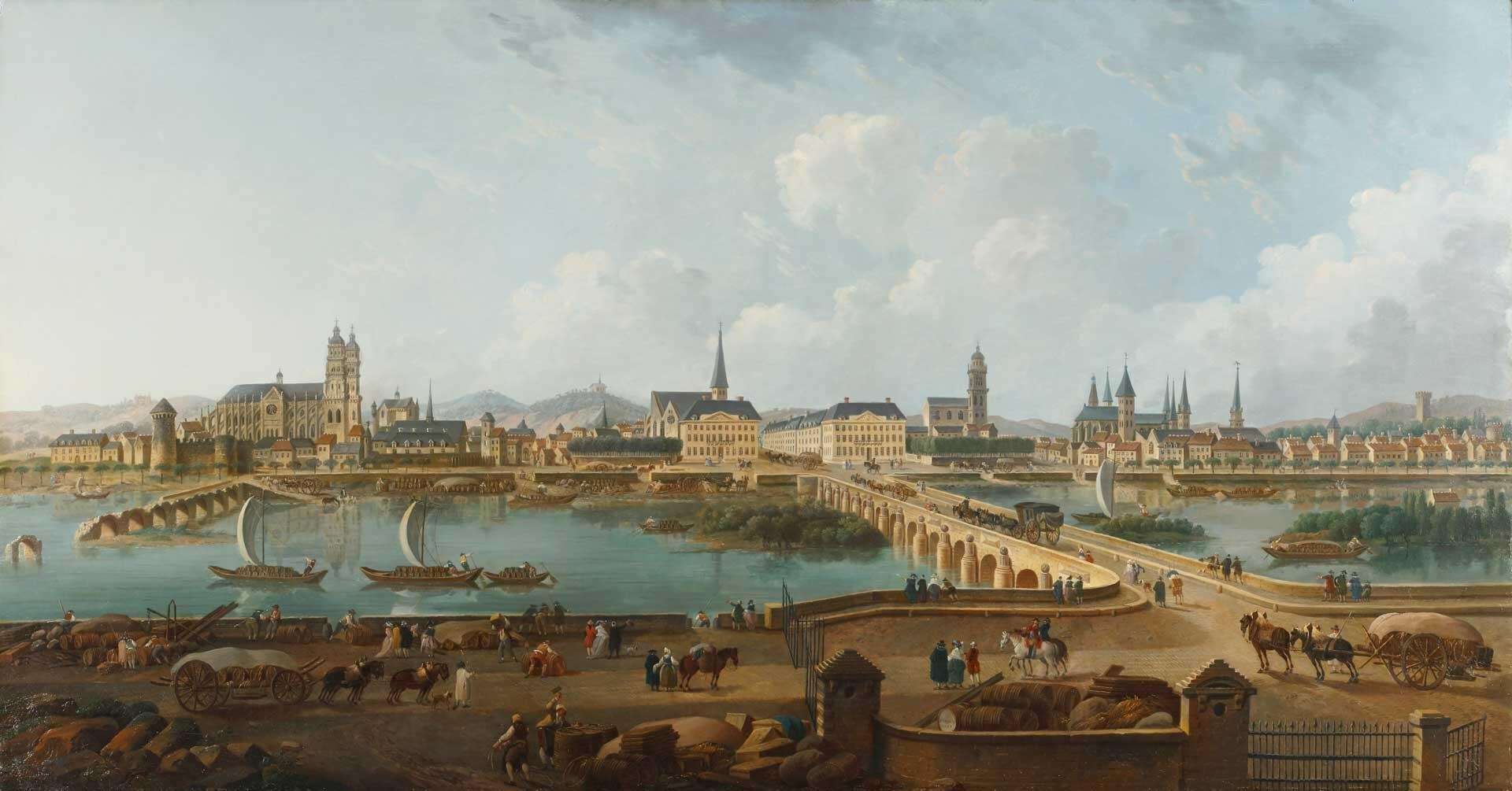
Based on documents from the time, the web series “Portraits de Loire au XVIIIe siècle” immerses you in this period of history, explores the Loire landscape and tells you about life on the Loire banks during the Age of Enlightenment. From river developments to the growth of towns and cities, the peaceful countryside to the vibrant cultural scene of the day, the web series’ 6 episodes give viewers an idea of what the Loire and its banks might have looked like in the 18th century.
After the web series “Portraits de Loire à la Renaissance”, we bring you a new series of videos going back over a pivotal period in the history of the Loire Valley: the 18th century, also known as “the Age of Enlightenment”. Just like for the previous web series, the aim of this project is to give the general public a chance to imagine what the Loire and its banks might have looked like during the 18th century. Studying history is also a way for us to explain today’s landscapes and to demonstrate the continuous nature of our relationship with the river.
Each thematic episode recounts an aspect of the life of the river and its inhabitants: developing and adapting water realms; the New World, the Triangular Trade and the Loire; great urban compositions; life in the countryside; the vibrant cultural and scientific scene; the wrecking of a Loire chaland.
In-depth research was required to reveal and select all of the images for the web series, which only come from sources from the period. In the 18th century, painting opened up to new subjects, like landscape, with a new perceptive approach. We therefore have a wealth of resources to illustrate the different themes touched on in the series. Cleaned, animated and shown in colour, these scenes captivate viewers throughout the narrative.
During the production of this web series, the audio aspect of the episodes was also paid close attention. While the previous web series gave precedence to sound design to recreate the sounds and atmospheres of the Renaissance, this episode put music in the spotlight. We asked the Consonance ensemble, which specialises in 17th- and 18th-century music, to record musical scores from the time, some of which were only recently rediscovered, played and recorded for the first time since their composition. Thanks to a partnership with the Musée des Beaux-Arts de Tours, the recordings took place in the museum, offering a contemporary architectural and cultural environment for the music performed.
Over and above the creation-related aspects, “Portraits de Loire au XVIIIe siècle” is also a connection tool: understanding the region where we live and its immediate environment a bit better helps us to feel a greater affinity towards it.
The nomination of the Loire Valley World Heritage clearly mentions the Age of Enlightenment as a historical period that is particularly represented in the Loire Valley:
While the general public is quite familiar with the Renaissance castles, heritage traces from the 18th century, though extensive, are less well identified. We could thus mention the bridges, which often form part of broader urban developments, in the cities of Orléans, Blois, Tours and Saumur. The expansion of road infrastructure paved the way to easier travel within the Kingdom. Mention could also be made of ports and engineering structures beside the river (levees, dykes, etc.) to contain high water levels and facilitate navigation, at a time that would become known as “the golden age” of Loire navigation. The ideals of this Age were no longer the privilege of the aristocratic classes (Château de Ménars, Domaine de Chanteloup, etc.), but were now also enjoyed by urban high society (literary and philosophical salons, scientific societies, theatres, concerts and so on).
The images curated for “Portraits de Loire au XVIIIe siècle” come from various local, national and international archive collections.
Archives Départementales d’Indre-et-Loire | Archives Départementales du Loiret | Archives Départementales de Loir-et-Cher | Archives de Nantes | Archives municipales et métropolitaines d’Orléans | Archives municipales de Saumur | Archives municipales de Tours | Bibliothèque Abbé Grégoire, Blois | Bibliothèque municipale, Tours | Château des ducs de Bretagne - Musée d'histoire de Nantes | Château de Sully-sur-Loire | Château-Musée de Blois | Château-Musée de Saumur | DREAL Centre-Val de Loire | Médiathèques d'Orléans | Médiathèque de Saumur | Hôtel Cabu, Musée d’histoire et d’archéologie d’Orléans | MSH Val de Loire / PCR Épaves et naufrages | Musées d'Angers | Musée des Beaux-Arts, Orléans | Musée des Beaux-Arts, Tours | Musée du Compagnonnage, Fédération Compagnonnique, Tours | Musée Dobrée - Grand Patrimoine de Loire-Atlantique | Musée de la Faïence et des Beaux-Arts, Nevers | Musée de la marine de Loire, Châteauneuf-sur-Loire | Région Centre-Val de Loire, Inventaire général | Société Archéologique de Touraine | Université de Tours - CETU Elmis Ingénieries
Archives départementales de Charente-Maritime | Archives nationales | Bibliothèque Mazarine | Bibliothèque nationale de France | École nationale des ponts et chaussées | Université de Caen Normandie / gallica.bnf.fr | Musée de l'Armée, hôtel national des Invalides | Musées d'Art et d'Histoire de La Rochelle | Musée de la batellerie et des voies navigables | Musée des beaux-Arts Antoine Lécuyer, Saint-Quentin (Aisne) | Musée Carnavalet – Histoire de Paris / Paris Musées | Musée des châteaux de Malmaison et de Bois-Préau / RMN-Grand Palais | Musée Flaubert et d’histoire de la médecine, Réunion des musées, Métropole Rouen Normandie | Musée Jean-Jacques Rousseau, Montmorency | Musée de La Poste, Paris | Musée du Louvre / RMN-Grand Palais | Université de Bordeaux, Direction de la Documentation, Bibliothèque de l'Institut des sciences de la vigne et du vin | Versailles, Châteaux de Versailles et de Trianon / RMN-Grand Palais | Ville de Paris / Bibliothèque du Tourisme et des Voyages / gallica.bnf.fr
Heidelberg University Library | Dallas Museum of Art | ETH Zurich Library | The Metropolitan Museum of Art | Philadelphia Museum of Art
Patrick Ehresmann Collection | David Rumsey Map Collection, David Rumsey Map Center, Stanford Libraries | Waddesdon Image Library, Waddesdon Manor
This audiovisual production was a joint endeavour with the agency Sisso.
It was supported by the following institutions: Direction régionale des affaires culturelles (DRAC) des Pays de la Loire | Plan Loire Grandeur Nature | Contrat de plan interrégional État-région (State-Region Interregional Plan Agreement – CPIER) | Région Centre-Val de Loire | Région des Pays de la Loire