G
La Garzette
Le journal le plus lu les pieds dans l'eau. Abonnez-vous !

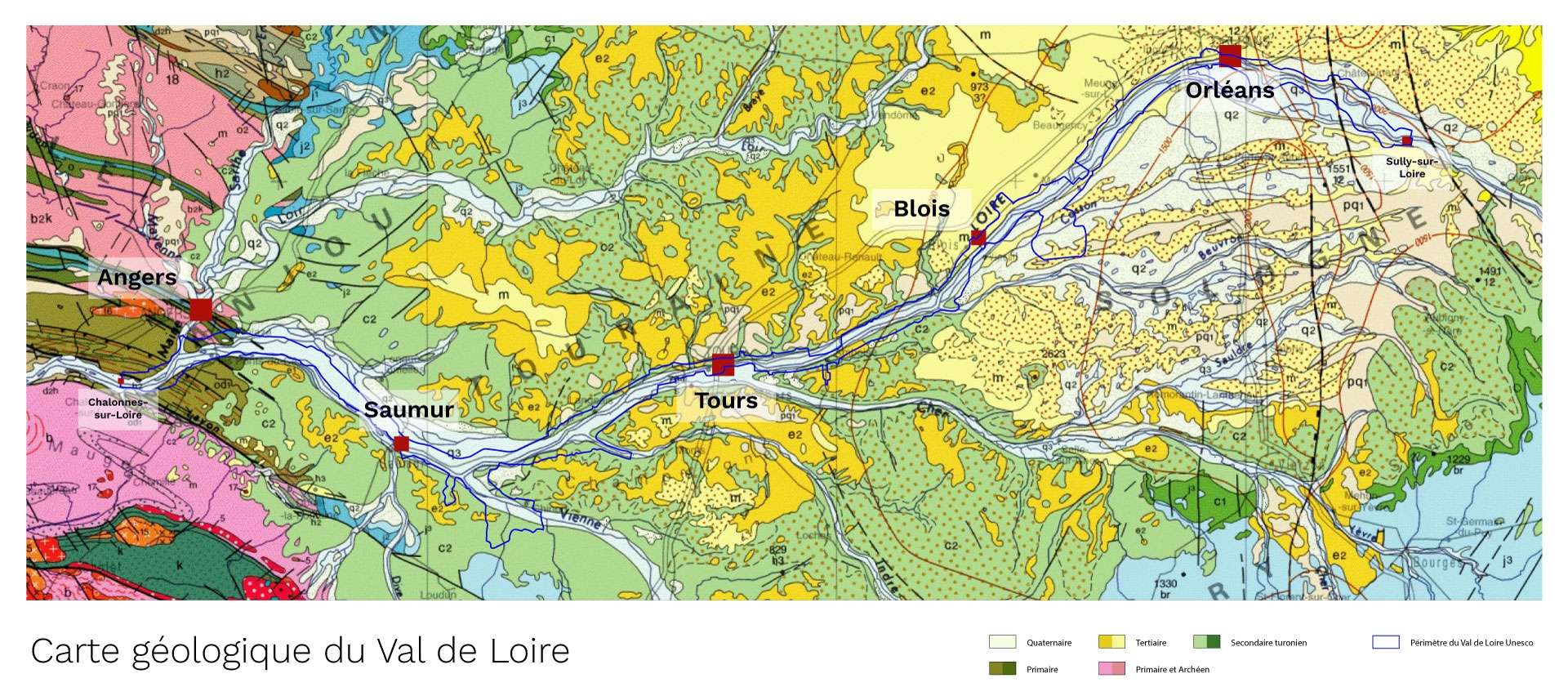
To understand the Loire Valley landscapes, we need a bit of geology. From its sources to its estuary, the Loire carries sediment from the Massif Central, the banks of the Orléans region and the Armorican Massif. The river deposited these as the terrain and currents changed.
After meandering through the alluvial deposits of Sologne, the river flows between carbonate rocks from different periods, starting with Beauce limestone harking from a lake formation which dyked up the right bank. Then, between Blois and Amboise, white chalk is the defining feature of the main landscapes such as at Chaumont-sur-Loire. Further west, the two types of tuffeau stone have been used in buildings: white for monuments and yellow for the levees.
On the left bank, the towns of Candes, Montsoreau and Saumur rose up on the Turonian tuffeau. On the right bank, before joining Angers and the Armorican Massif, then the estuary, the River Authion runs alongside the Loire. The alluvial plain evolves into “polders”, fertile land hemmed in by the levee.
In the Middle Loire region, the confluence zones are characterised by vast expanses of meanders: the valley widens and the river flows for several miles parallel to its tributary before they join up.
Beyond Les Ponts-de-Cé, the river follows a valley hollowed out through the Armorican Massif as far as the estuary. Schist, mica schist, sandstone and even Layon coal run alongside the Loire, sediments from which are deposited on the beaches of the Atlantic Coast.